Past Events

Event Date

Art lecture and book launch by Nutley's own: Gary Erbe, nationally known trompe l'oeil artist

Dec. 4,2016 -- The Nutley Historical Society proudly hosted the book launch, lecture and book signing by Gary Erbe, nationally known trompe l’oeil artist and Nutley resident held a the Nutley Museum.

Erbe presented Footprints: The Art and Life of Gary Erbe, a newly released book published by The Butler Institute of American Art.

Signed copies of the book were available for sale at the event and the Ann Troy Gallery at the Nutley Museum welcomed visitors.
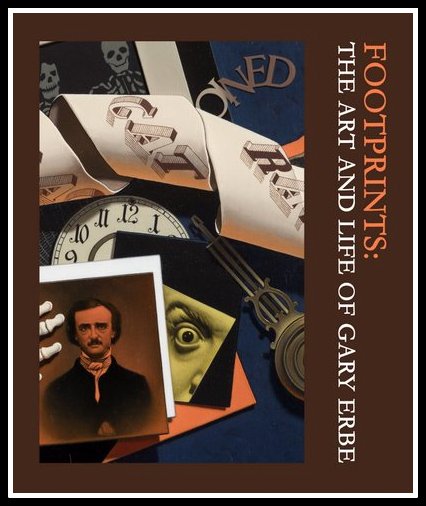
Footprints: The Art and Life of Gary Erbe book cover

About Footprints: The Art and Life of Gary Erbe

This large-format scholarly written volume is hard cover, 300 pages with over 250 illustrations. This is the most comprehensive book written about Gary Erbe, one of America’s foremost trompe l’oiel artists.

In the book, a distinguished group of art historians focuses in depth on the artist’s life and over fifty years of creating an impressive body of work consistent in quality and vision. Contributing writers are Dr. Thomas Folk, Dr. Carol Lowrey, Dr. Christine I. Oaklander, Carter Ratcliff, Dr. Michael W. Schantz and Dr. Louis A. Zona.

Erbe personally devotes one chapter of this 11-chapter book to the technical aspects associated with painting, including how to prepare canvas like the old masters, a special formula for the oil medium he uses, the proper varnish to use, and the palette.

This first edition book is limited in numbers and a must for art lovers and students of all ages.

“The Nutley Historical Society is thankful to Gary Erbe for the opportunity to premiere this important new book about a major American painter who resides in our town,” says Barry Lenson, Art Director of the Nutley Museum. “Since Gary Erbe and his wife Zeny moved to Nutley in 2009, they have become champions of The Nutley Historical Society. Over the years, Nutley has been home to painters Albert Sterner, Arthur Hoeber, Reginald Marsh, Michael Lenson and others. Of them all, Mr. Erbe is probably the most renowned and respected.”

About Gary T. Erbe

Gary T. Erbe, a self-taught painter, was born in 1944 in Union City, N,J., where he maintained his studio from 1972 until 2006. Unable to attend art school, he worked as an engraver to support himself and his family. In 1967, he discovered trompe l’oeil painting and its masters and found his artistic place. He enlarged the scope of nineteenth-century trompe l’oeil painting by adding the illusion of levitation and a near-magical juxtaposition of objects which, in his words, “in reality had no relationship.”

Since Erbe decided to pursue his art full time in 1970, he has exhibited in both solo and group exhibitions in many of America’s most important art museums. A partial list includes a 40-year retrospective exhibition that traveled to the Butler Institute of American Art, the Salmagundi Club, the Boca Raton Museum of Art and other venues (2008-2009), a solo exhibition in the Grand Gallery of the National Arts Club in New York (2000), and a 25-year retrospective exhibition that was shown at the James A. Michener Museum, the Butler Institute of American Art, and other institutions.

Erbe has won numerous awards, including the Gold Medal of Honor at the 2007 Allied Artists of America 94th Annual Exhibition, First Prize at the Butler Institute of American Art’s 66th National Midyear Exhibition, and many others. His paintings are held by many museums and private collections.

For more information Gary Erbe
 

Tags

Event Date

Nutley, N.J., Oct. 25, 2016 – The Nutley Historical Society has been awarded a $1,000 grant by Wells Fargo Foundation to support the organization’s mission to promote understanding of Nutley history among the people of Nutley.

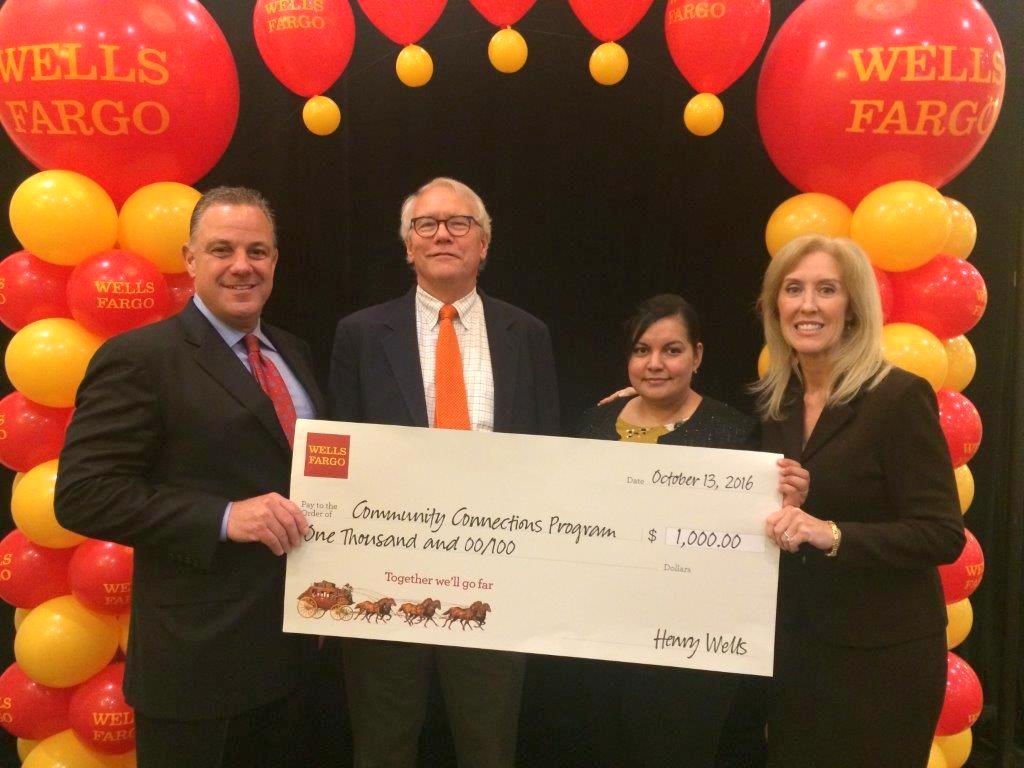
Check for $1,000 being presented by Wells Fargo to the Nutley Historical Society
Nutley Museum Art Director Barry Lenson accepts $1,000 grant from Wells Fargo Community Connections Program. From left, Wells Fargo Northern N.J., Region President Fred Bertoldo; Lenson; Central Essex District Manager Mireya Contreras; and Metro North Jersey Area President Ivon Creagh.

The Nutley Historical Society was founded in 1945 when a group of concerned Nutley citizens decided to establish the Nutley Historical Society and Museum in the historic brick Church Street School which is located at 65 Church Street, Nutley.

The beautiful and historic museum, built in 1875, is on the National Register of Historic Places and is the envy of many other civic historical societies in New Jersey.

The museum holds a series of open houses, lectures, tours and other events that are attended by more than 500 Nutleyites every year, as well as by visitors from other towns and states. Other programs include college scholarships given to Nutley students, special exhibitions in the Nutley library and elsewhere, and a vibrant program of other events.

“We truly appreciate Wells Fargo’s support,” said Domenick Tibaldo, President of the Nutley Historical Society. “We will use this grant to produce more high-quality experiences for the people of our town, and to increase outreach and public awareness of our museum and its mission.”

The grant was awarded as part of Wells Fargo’s Community Connections program, which provides local branch managers the opportunity to make a $1,000 charitable contribution on behalf of Wells Fargo to a nonprofit of their choice.  

Wells Fargo Northern New Jersey branches distributed a total of $148,000 in grants to support nonprofit groups, an increase from last year’s $139,000 contributions.

“We host this annual breakfast to celebrate, recognize and say thank you to community heroes such as The Nutley Historical Society for all of their invaluable contributions and dedicated service to empower northern New Jersey neighborhoods over the past year,” said Fred Bertoldo, Wells Fargo’s Northern New Jersey region president.  â€śEach nonprofit grant recipient was identified by our local branches. They see which nonprofits are out in the community making a difference in the areas where many team members and customers are proud to live and work.”

The annual Community Connections program offers Wells Fargo branch managers the opportunity to provide additional grants to local nonprofits of their choice in New Jersey, Connecticut, Delaware, New York and Pennsylvania.

Event Date

A walking tour

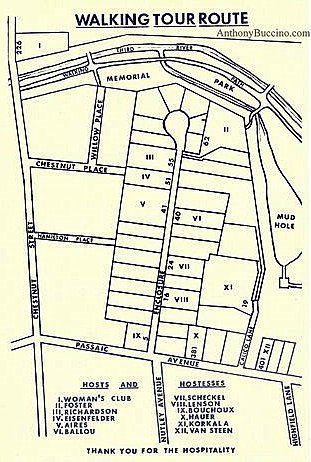
The Enclosure Artists' Colony

Walking Tour Route of The Enclosure Artists Colony, Nutley NJ

According to the Walking Tour of The Enclosure and Environs on Oct. 28, 1973, conducted and created by the Nutley Historical Society to support restoration of Kingsland Manor:

Mallaby House: 62 Enclosure

1840 – Owned by the Mallaby family until the 1920s, the George Symonds lived there from 1882 to 1886. Mrs. Symonds was the former Isabelle Vreeland.

Arthur Hoeber House: 55 Enclosure

1891 – A plaque over the living room fireplace proclaims "this house was built for Arthur and Mary Hoeber in MDCCCXCI". Mr. Hoeber, while primarily a landscapist, wrote several books on 19th Century painting and was a critic and/or editor for The New York Times, Illustrated American, New York Journal and others.

Abraham and Warren Vreeland House: 51 Enclosure

1836 – Abraham, son of John (Vreeland Homestead), built this house on the present site of the First National State Bank. In 1924, while the house was being moved to its present location, it was cut in half to prevent damage to trees along the route. The carved stone front step was moved at the same time.

Earl Stetson-Crawford House: 41 Enclosure

1904 – Mr. Stetson-Crawford was an artist who executed murals in the Albany State House, San Francisco and New York Libraries. His wife was a miniature painter.

Albert Sterner House: 40 Enclosure

1872 – Originally built by Albert Sterner as a studio, the house over the years has been expanded to its present configuration. Sterner, a painter, etcher and lithographer, illustrated for Life, Scribner's, Harper's, and Century. The studio also served Charles W. Hawthorn, an American portrait and genre painter and founder of the Cape Cod School of Art.

John Hay House: 24 Enclosure

1853 – This house was built by John Hay who wrote for Century. Containing five working fireplaces, it is a fine example of Victorian architecture.

Frank Fowler House: 16 Enclosure

1872 – For nearly a century this house was home and studio to more artists than any other in The Enclosure. Frank Fowler, who built this first studio in The Enclosure, painted frescoes in the Luxembourg Palace and the Waldorf-Astoria. His wife was also a painter. At the turn of the 19th Century, Frederick Dana Marsh, famous for industrial scenes of laborers at work, and his artist wife took possession of the house. Their two sons, Reginald and James, were also artists. Next came Guy Pene Du Bois, artist, critic and editor. In the 1940s, the next Enclosure artist, Michael Lenson, came to work and live. Muralist, teacher and administrator, Lenson lived there until his death in 1971.

Baron Von Strom House: 5 Enclosure

1888 – A Swedish nobleman and architect, Baron Von Strom built this Tudor style house for his own family. He also designed the Rector of Grace Church, the Goodrich home, the Prout home, the Platt house and Herbeling's Drug Store across from the Enclosure.

John Mason House: 19 Calico Lane

1812 – Near this spacious stone house was a saw and grist mill and tannery belonging to Captain John Speer. This was later converted to a cotton mill by Mason. At the turn of the 19th Century the house was owned by James R. Hay, a real estate man who has been credited with bringing many artists to the area.

Duncan House: 401 Passaic Avenue

c. 1830 – Originally part of Duncan Mills and residence of W. Duncan, this house was later converted into a factory to make rugs, an office of Public Service Gas and Electric and a gift shop. In the 1920s it was reconverted into a private home.

Vreeland Homestead: 226 Chestnut Street

1702 – Belonging to the VanGieson family prior to the American Revolution, the house was lost to Captain Abram Speer who sold it to John M. Vreeland in 1783. The Woman's Club of Nutley used the homestead from 1912 to 2012.


Other Nutley artists with local ties, according to Nutley Historical Society research include:

Beda Zel Angle; Estelle Armstrong; William T.L. Armstrong;

Natalie Bain; Clinton Balmer; Frances I. Bennett; Virginia Bennett; Robert S. Bowden; Edward Bridges; David Bryant;

Ann Cole; Harry Chase; Brenetta Stetson-Crawford; Maureen Crost;

Charles J. Daidone; Francis L. Day; Paul Dougherty; June Driscoll;

Arthur J. Elder; William Eville;

Alfred Fanellli; Edward Loyal Field; Vivian Noyes Fikus; Mary Sargant Florence;

Michael Gabriele; Ralph Goddard; Harry Grabowski;

Tom Haas; Hamilton Hamilton; I. B. Hazelton; Alan Hewitt and Edith Hewitt;

Roy Imhoff;

Charles Kendrick; Richard Kramer; David Kwo;

Olimpia Lordi; Tom Lovell; Fernand Lungren;

Anne Steele Marsh; Adam Molarsky; Abram Molarsky, Sarah Ann Shreve Molarsky; John Moore;

Marie Pupke;

Ruth Sawyer; John Schermerhorn; Carl L. Schmitz; Tacie Sergeant; Edgar Sergeant; Marie Spinning; Frederic Dorr Steele; William A. Stuart;

Roger Townsend;

Emmy Van Deven;

George Waldo; Muriel M. Woodcock;

William Yeager.


In 1873, 19th century land developer James Hay purchased the circa-1812 John Mason house located by Cotton Mill Pond, now known as the "Mudhole" in Memorial Park I. This house, which stands today, is of Federal design and is one of Nutley's most architecturally significant buildings. It is now part of the Enclosure Historic District that was placed on the National Register of Historic Places in 1973.

Hay was instrumental in enticing scores of artists, authors and magazine editors to make the Enclosure and its environs their home.

Among the list of notables who lived in Nutley were painters Frank Fowler, Frederic Dorr Steele, Frederick Dana Marsh and his wife, Alice Randall, Albert Sterner, Arthur Hoeber, Earl Stetson-Crawford and his wife, Brenetta and Ferdinand Lungren; authors Frank Stockton, Henry C. Bunner, and editors of such prominent magazines as Puck, Century, Judge and The Railroad Gazette.

Even the famous sharp shooter Annie Oakley took up residence in 1892 in a house on Grant Avenue (since demolished). In 1894, she and Henry C. Butler, the editor of Puck magazine, with many other town residents, volunteered their services to produce the Nutley Amateur Circus on the grounds of the Eaton Stone Circus Headquarters on Kingsland Road to benefit the American Red Cross. Special trains arrived from New York bringing in people to witness the event.

Adapted from History of Nutley - 1907


The Artists of 16 Enclosure